

A preschooler doesn’t need to know what a corner kick is before joining a soccer class. They need a ball they can chase, enough space to move, and a coach who knows that a four-year-old may follow an instruction one minute and wander after the ball the next.
That’s why the first class matters. For parents and early childhood centers looking at soccer classes for preschools, the useful question isn’t how quickly a child can learn the rules. It’s whether the class feels right for the way preschoolers learn.
At Soccer Stars, early childhood soccer starts with that reality. Activities are built around the child’s age and stage, giving young players a chance to become familiar with the ball while they learn how to participate in a group.
What actually happens in a preschool soccer class?
A preschool soccer class shouldn’t look like a scaled-down version of an older child’s practice.
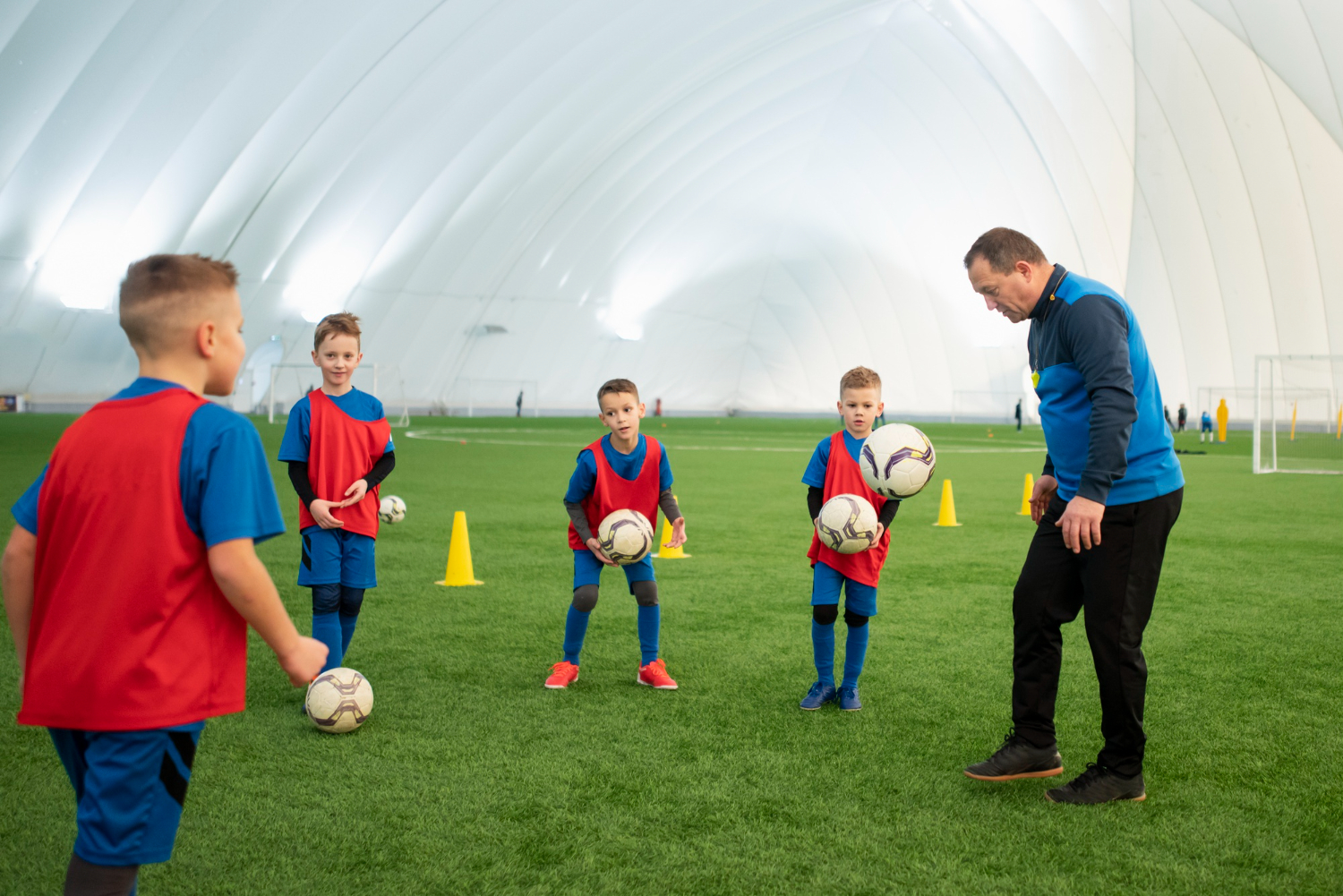
Young children need frequent opportunities to move. They may chase a ball, stop it, kick toward a target, dribble through a simple course, or follow a coach into a game. The activity changes, but the basic idea stays the same: children learn by doing.
There will be misses. A child may kick the ball too far. Another may forget the instruction halfway through. That’s part of the process.
Instead of expecting perfect technique, a good early childhood soccer class gives children repeated chances to try the same movement in slightly different ways. Eventually, stopping the ball becomes easier. Kicking feels more natural. Following a coach becomes less unfamiliar.
That’s a much more useful starting point than making a preschooler memorize soccer rules.
Why the pace matters
Preschool attention can disappear quickly, especially when an activity feels too difficult or takes too long to explain.
A coach working with this age group has to keep instructions simple and demonstrations easy to follow. There should be enough repetition for children to understand what they’re doing, but enough variety to keep them interested.
We use age-specific lesson plans and trained coaches for our youth programs. Our Super Soccer Stars classes are designed for young children beginning around age 2.5, with instruction adapted to their developmental stage.
The first skill may be confidence
Parents may expect their child to come home talking about kicking or dribbling. Sometimes the bigger change is less obvious.
Maybe the child finally joined the group instead of standing beside a parent. Maybe they tried an activity after watching another child do it first. Maybe they chased the ball without asking for help.
Those moments matter in a first sports experience.
A young child who feels comfortable trying something unfamiliar has more room to learn the actual soccer skills later. That’s one reason positive coaching matters so much at this age. A mistake doesn’t need to become a big moment. The child can simply try again.
For soccer classes for preschools, that kind of environment can be more appropriate than a class built around competition or performance.
What should a preschool soccer class make room for?
The details of a session matter. Parents and preschool directors can pay attention to whether the class provides:
- Movement: Children spend a meaningful part of the session running, kicking, stopping, or changing direction rather than standing in lines.
- Simple instruction: Activities can be understood without a long explanation.
- Repetition: Young players get more than one chance to practice a movement.
- Individual attention: Coaches have an opportunity to notice when a child needs another demonstration or a little encouragement.
- Group play: Children begin learning how to participate around other players.
None of these requires a preschooler to understand positions or follow a full set of game rules.
What a coach does differently with preschoolers
Coaching young children takes more than knowing soccer technique.
A preschool coach has to notice when the group is losing interest, when an activity needs to be simplified, and when a child is ready for a slightly harder challenge. The same explanation won’t work for every child.
We place trained coaches in our programs and use age-specific curriculum. Our approach also emphasizes positive reinforcement and a non-competitive environment for young players.
That combination matters during the first few classes. A coach isn’t simply teaching a kick. They’re helping children understand what a soccer class feels like.
At Soccer Stars Huron Valley, young players can work on basic soccer movements in a setting designed around their age rather than being expected to perform like older youth players.
Preschool soccer isn’t only about the ball
The ball gets most of the attention, but watch what happens around it.
Children learn to wait for a turn. They move around classmates. They listen when the coach gives a new direction. They learn that another child may get the ball first and that the game continues anyway.
Those are small group experiences, but they are useful ones.
We connect our early soccer programs with physical literacy, gross motor development, socialization, teamwork, and confidence. The soccer skills develop alongside those experiences rather than being separated from them.
For a preschool, that can make an outside soccer program useful as part of an early childhood enrichment schedule. Children get a structured activity while remaining within an environment that’s familiar to them.
Why age-specific programming changes the experience
A two-year-old who is just getting comfortable with organized activities has different needs from a five-year-old who can follow several directions in sequence.
That sounds obvious, but it’s easy to overlook when comparing children’s sports programs.
We organize our early offerings around age groups and developmental stages. Parent & Me introduces soccer-related movement to toddlers, while Super Soccer Stars gives older toddlers and preschool-age children a more structured class experience. As children grow, the program can become more advanced.
That progression gives a child time.
They don’t have to arrive at their first class already knowing how to dribble. They can build familiarity first, then add new skills as they are ready.
What should parents expect after the first few classes?
Don’t judge a preschool soccer program only by how many skills your child can demonstrate afterward.
Look for smaller signs.
- Does your child recognize the soccer ball when they see it?
- Do they remember part of an activity?
- Are they willing to join the group more quickly?
- Do they ask to kick the ball again?
Those responses can tell you whether the child is becoming comfortable with the experience.
A preschooler is still developing basic movement skills, so progress won’t always be obvious from one class to the next. Some days will go better than others. That’s normal.
Soccer can come to the preschool
For early childhood centers, the logistics matter too.
Families don’t always have the time to drive somewhere else for every activity. A soccer provider that works with preschools can bring the program into the child’s existing environment, reducing another scheduling hurdle for parents and school staff.
We offer programs for early childhood centers and schools, allowing young children to participate during their regular school experience.
That also gives coaches a chance to work with children in a setting they already know. For some preschoolers, that familiar starting point can make the first class feel less intimidating.
The first experience shouldn’t rush the next one
A preschooler has plenty of time to learn formations, positions, passing combinations, and the rules of a full game.
The early stage has a different job.
It’s about becoming comfortable with movement, learning what it feels like to control a ball, listening to a coach, and finding enjoyment in playing with other children.
For families considering soccer classes for preschools, we offer a starting point built around those early needs, with age-specific instruction and a progression that can continue as children get older.
The first class doesn’t have to prove anything. A child kicking the ball, smiling, and asking for another turn is a pretty good place to start.
Conclusion
Before preschoolers learn the rules, they learn the feel of the game.
They discover how hard to kick. They chase a ball that gets away from them. They figure out how to move around another player. They get used to listening, trying, missing, and trying again.
That’s why the class itself matters.
At Soccer Stars Huron Valley, the early experience is built around young children’s developmental stage, with trained coaches and age-specific instruction rather than expectations borrowed from older players.
For parents and early childhood centers exploring soccer classes for preschools, the right starting point is one that lets children learn the game at a pace that makes sense for them.
