

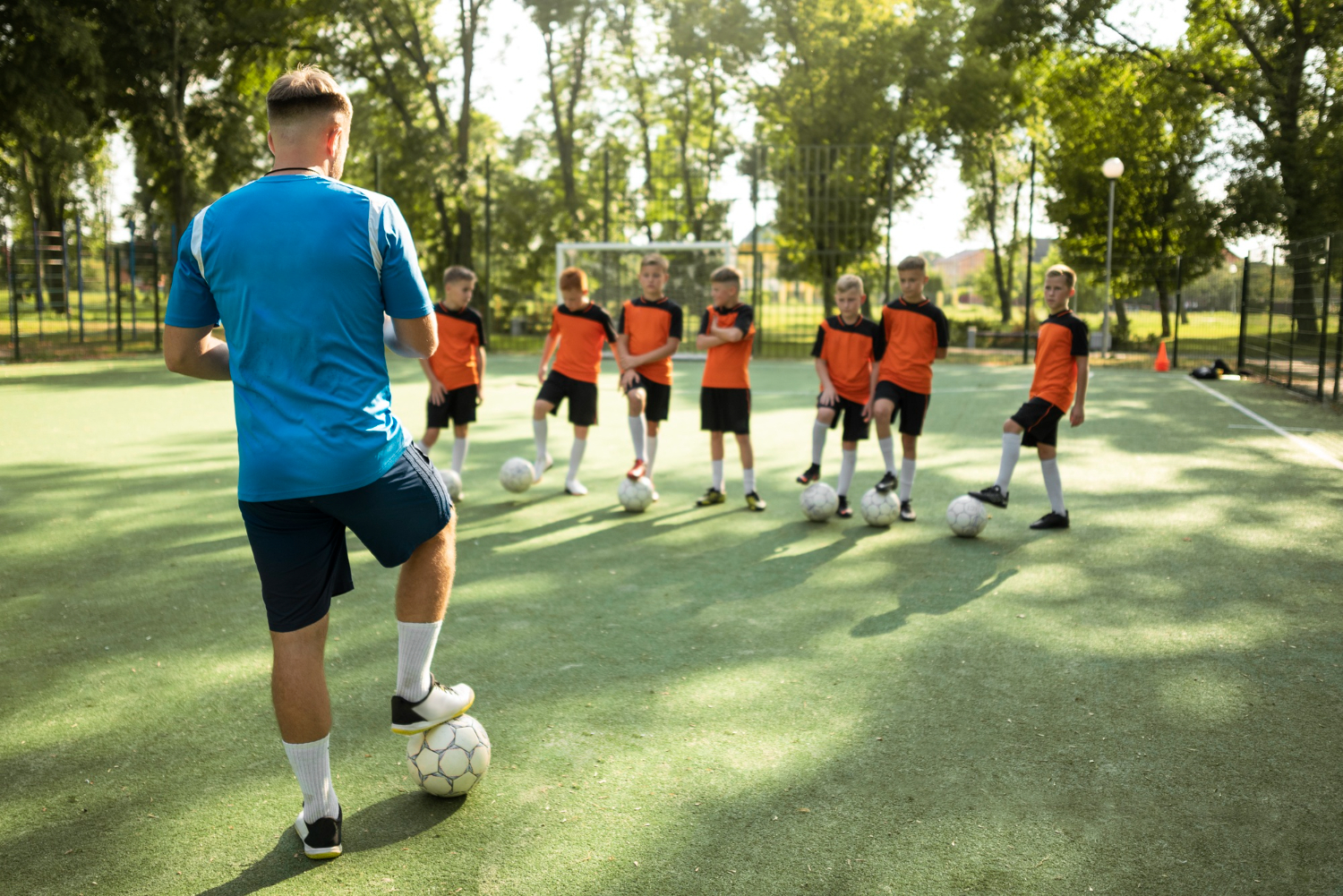
A 3-year-old chasing a soccer ball across the field needs a very different experience from a 12-year-old looking for space before receiving a pass. They play the same sport, but the way they learn it changes as they grow.
That difference matters when parents compare youth soccer programs in Novi. Age is a useful starting point, but it doesn’t explain what a child should actually be learning at each stage.
We use age-based programming to give young players activities that match their development. From early movement and ball play to more advanced technical and tactical work, the experience changes as the player changes.
Age 3: Soccer Starts With Movement
At three, a soccer ball can be a completely new experience.
A child might chase it, kick it too hard, stop to watch another player, or run off in another direction. That’s normal. The goal isn’t to make a preschooler look like a trained player.
Instead, early soccer can help children become comfortable moving, kicking, stopping, changing direction, and following simple instructions. They also begin learning what it feels like to participate in a class with other children.
Soccer Stars’ youngest programs are designed around this stage. Parent & Me introduces toddlers to soccer through age-appropriate activities, while early Super Soccer Stars classes build basic movement, and soccer skills.
For parents, enjoyment is a useful measure. If a child wants to kick the ball again after class, they’re getting something from the experience.
Age 6: Skills Start Connecting
By six, many children can handle more structured instruction. They can repeat a movement, listen to a coach, and start understanding what happens when they change the way they use the ball.
Dribbling becomes about keeping the ball close. Passing has a purpose. Shooting becomes more than simply kicking as hard as possible.
This is a good stage for building fundamental soccer skills through repetition, and games. Children can practice dribbling, passing, receiving, and shooting while beginning to use those skills during play.
The coaching approach matters. A six-year-old may need several tries before a movement feels natural. They also need enough freedom to make mistakes without feeling that every mistake is a failure.
Soccer Stars’ Super Soccer Stars program focuses on foundational instruction for young players, using age-appropriate activities and a positive learning environment.
And two six-year-olds may still need different things. One may have played soccer for years. Another may be holding a soccer ball for the first time. Their age is the same. Their starting points aren’t.
Age 9: The Game Gets Bigger
Around nine, children can begin paying attention to more than the ball.
They may start asking themselves where to move after passing, whether to dribble or pass, and why another player is standing in a particular position.
That changes training.
Technical skills remain important, but players can start applying them while dealing with teammates, opponents, and space. Small-sided games can give children more opportunities to make decisions, and experience different situations.
This is worth considering when looking at youth soccer programs in Novi. A program suitable for a beginner may not provide enough challenge for a player who is ready to make quicker decisions.
Soccer Stars United provides a progression from Super Soccer Stars for players who are ready for more advanced instruction. The program introduces additional technical, tactical, and team concepts as players develop.
The basics haven’t disappeared. Players are simply being asked to use them differently.
Age 12: Players Can Start Owning Their Development
At twelve, young players often become more aware of their own strengths and weaknesses.
One player may want to improve finishing. Another may need more confidence with their weaker foot. Someone else may understand the game well but struggle when an opponent applies pressure.
This is where development can become more individual.
Players can work on technical consistency while paying closer attention to positioning, movement, decision-making, and their response to different game situations. Feedback becomes more useful because older players can begin understanding why a particular choice works.
Being older doesn’t automatically mean a player needs the most advanced class available. The challenge still needs to match the player’s ability and experience.
Our broader pathway includes advanced development options for older youth, giving players opportunities to continue developing as their needs change.
What Changes From 3 to 12?
The biggest change isn’t simply the number of skills a child learns. It’s how they use those skills.
- Age 3: Movement, comfort with the ball, and enjoying the activity.
- Age 6: Basic skills, repetition, and understanding simple actions during play.
- Age 9: Decision-making, space, teammates, opponents, and applying technique during games.
- Age 12: More individual feedback, technical refinement, game awareness, and greater responsibility for development.
These aren’t strict deadlines. Children develop at different speeds. A player can be confident with the ball but still need help making decisions, or understand positioning while continuing to work on basic technique.
The program should leave room for those differences.
Why the Progression Matters
It can be tempting to view youth soccer as one activity that simply becomes harder with age. The reality is more specific.
A toddler may need playful activities that keep them moving. A six-year-old may need repetition without losing interest. A nine-year-old can benefit from situations that require choices. A 12-year-old may need feedback focused on particular parts of their game.
At Soccer Stars Huron Valley, the age-based structure gives players room to move through these stages without treating every class as the same experience. We offer programs covering early childhood through older youth, with instruction changing as players gain experience.
That can make a difference for Novi families. A child doesn’t have to be pushed into a more advanced setting simply because they’re getting older. The next step should make sense for the player.
Finding the Right Fit for a Young Player
Parents don’t need to decide what kind of soccer player their child will become at age three.
Look at what they’re ready for now.
- Is a young child enjoying movement and kicking?
- Is a six-year-old starting to control the ball?
- Is a nine-year-old beginning to notice where teammates are moving?
- Is a 12-year-old asking how to improve a particular skill?
Those observations can help parents think beyond an age label.
For families researching youth soccer programs in Novi, we provide a progression that can adapt, as children gain experience. Our age-based curriculum helps keep the focus on what a player is ready to learn rather than simply moving everyone through the same activities.
At Soccer Stars Huron Valley, the aim is to give children an experience that grows with them, from those first uncertain kicks to the point where they can think more carefully about how they play.
Conclusion
A 3-year-old and a 12-year-old don’t need the same soccer class. Early experiences may focus on movement and comfort with the ball. Later stages can bring more technical work, decision-making, tactical awareness, and individual development.
That’s why parents comparing youth soccer programs in Novi should look beyond the age listed beside a class. The more useful question is what children at that stage are actually being asked to learn.
Our progression gives families a way to follow that development as their child grows. The right experience can change from year to year, and that’s exactly how youth soccer should work.
