

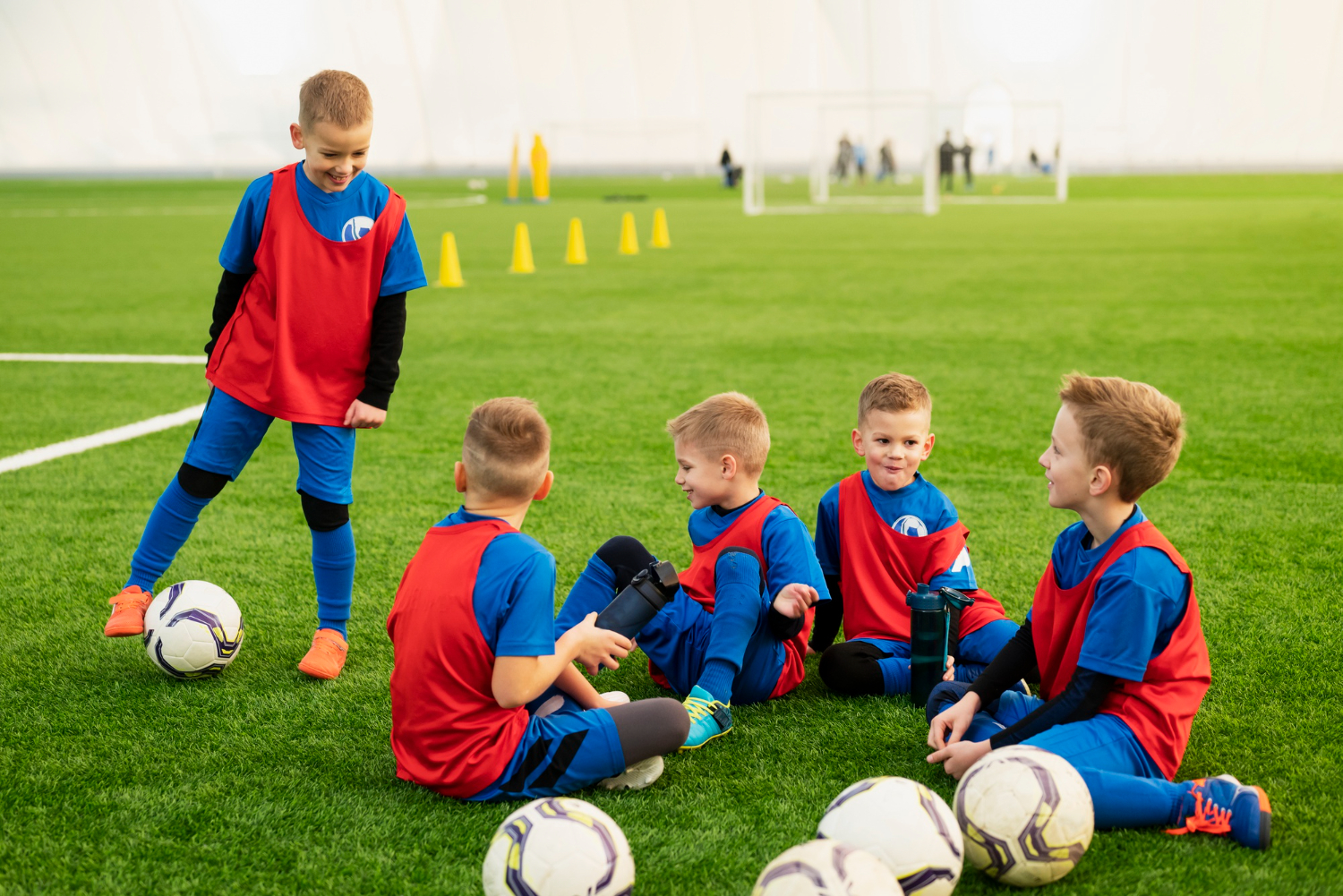
A toddler’s first soccer class can go a few different ways. Your child might head straight for the ball, stay close to you, or spend the first part of class watching everyone else. All are common reactions. A new coach, an unfamiliar space, and a group of children can feel like a lot for a toddler.
You don’t need to teach soccer skills before the first class. A little play at home and a familiar routine can help your child feel more at ease. Some toddlers jump right in. Others need time.
Good toddler soccer class preparation starts with keeping things low-pressure. Let your child explore the ball, take a break when needed and get used to the idea of a class without expecting too much on day one.
What should parents expect from a toddler’s first soccer class?
A toddler soccer class introduces young children to movement, and simple ball games. Activities may include kicking a ball, following a coach’s directions, or taking turns with other children, depending on the program.
Some toddlers join in as soon as class starts. Others watch from the sidelines before trying anything. A child might also lose interest halfway through, or want a parent close by.
That’s okay. Toddlers are still learning how group activities work, and following directions doesn’t always come easily at this age. A good first class gives children room to look around and join in when they’re ready.
1. Introduce soccer through play at home
Formal training can wait. A ball and a few minutes of play are enough to help your toddler get familiar with some of the movements used in soccer.
Try a few simple games:
- Kick a soft ball: Put a ball on the floor and invite your child to kick it toward a nearby target.
- Follow the ball: Roll a ball across the room and let your toddler walk after it.
- Play stop and go: Ask your child to move when you say “go” and pause when you say “stop.”
- Roll the ball back and forth: Sit opposite each other and take turns rolling the ball.
Keep it short. If your toddler wanders off after two minutes, don’t make a big deal of it. Play should feel like play, not another task to finish.
These little games can make the ball and basic movements feel less unfamiliar before class day.
2. Make class day feel familiar
Toddlers often settle more easily when they know what’s coming. Explain the plan a day, or two beforehand using simple words. You might say, “We’re going to play with soccer balls and meet a coach.”
No long explanation needed.
On class day, leave enough time to get dressed and travel without rushing. If possible, choose a session that fits around your child’s usual nap and meal times. A tired or hungry toddler may have a harder time settling into a new activity.
Good toddler soccer class preparation is mostly about making the day feel manageable. You don’t need to rehearse every instruction or explain all the rules before you arrive.
3. Choose comfortable clothes and keep gear simple
Toddlers need clothes that let them walk, bend, run and kick freely. Lightweight athletic clothing suited to the weather is a sensible place to start.
Check the class instructions before buying footwear or equipment. Requirements can vary by location so there’s no need to purchase a full soccer kit before the first visit.
A small bag may include a water bottle, spare clothes if needed and a jacket for outdoor sessions. A familiar comfort item may help with the transition, too, if the program allows it.
Keep the setup simple. Your toddler doesn’t need expensive gear to try soccer for the first time.
4. Practice listening and taking turns through games
Following a coach’s directions and waiting for a turn take practice. You can introduce both during everyday play without expecting your toddler to get everything right.
Give one short instruction at a time. Ask your child to bring the ball, roll it toward you, or pause before kicking again. Then give your toddler a moment to respond.
Turn-taking games are useful, too. Roll the ball back and forth while saying “your turn” and “my turn.” If your child grabs the ball and runs off, leave it there for now. Try again another day.
The purpose of toddler soccer class preparation isn’t to teach every rule in advance. A few familiar activities are enough. The coach can help with the rest.
5. What if your toddler clings to you or refuses to join in?
Your toddler may stay close to you for most of the first class. New people, unfamiliar surroundings, and group instructions can feel overwhelming, especially when a child doesn’t know what to expect.
Don’t force participation. Instead, let your child watch the coach, and other children for a while. Offer reassurance, praise small attempts, and avoid comparing your child’s response with anyone else’s.
Even walking toward the ball or trying one activity can be a good start. If you’re unsure how much to step in ask the coach for guidance.
At Soccer Stars Huron Valley, the focus is on age-appropriate learning in a fun, noncompetitive setting. The Parent & Me program serves children ages 1–2 and includes music, movement, and early developmental activities with caregiver participation.
Parents can explore local soccer programs to find a suitable starting point.
6. Plan around naps, snacks, and energy levels
Timing matters. A toddler who has missed a nap, or is hungry before class may struggle to settle down.
Whenever possible, choose a class time that fits your child’s usual routine. Offer a familiar snack beforehand if appropriate, and leave time for a diaper change or bathroom visit before heading out.
Arrive with a few minutes to spare. Your child may want to look around before the session begins, and that’s easier when you’re not rushing through the door.
If your toddler needs a break during class, respond calmly and follow the coach’s guidance. The first session is a chance to try something new, not a test your child has to pass.
7. Give your toddler time to adjust
One class may not tell you whether your child will enjoy soccer. A toddler might happily kick the ball but hesitate during group games. Another might join in at first and then need a break.
Give your child time to get familiar with the coach, and class routine. Pay attention to which activities hold their interest and whether the setting feels right for their age and temperament.
We encourage parents to focus on participation rather than immediate progress. Our goal is to make early soccer experiences enjoyable, and appropriate for young children.
Should parents stay during a toddler soccer class?
That depends on the program. Parent & Me sessions involve caregiver participation, while other classes may follow a different format. Check the class details before attending so you know whether you’ll be expected to join in or watch from the sidelines.
Conclusion
Your toddler’s first soccer class doesn’t have to go perfectly. A little play at home, comfortable clothes, and a calm start to the day can make the experience easier. Some children join in straight away. Others need more time.
At Soccer Stars Huron Valley, families can explore programs designed for different ages and stages. Review the available classes and choose one that fits your child’s needs.
With thoughtful toddler soccer class preparation, the first session can be a chance to try new movements and see whether soccer is an activity your toddler enjoys.
Explore Soccer Stars Huron Valley classes to find a program that fits your child’s age and stage.
