

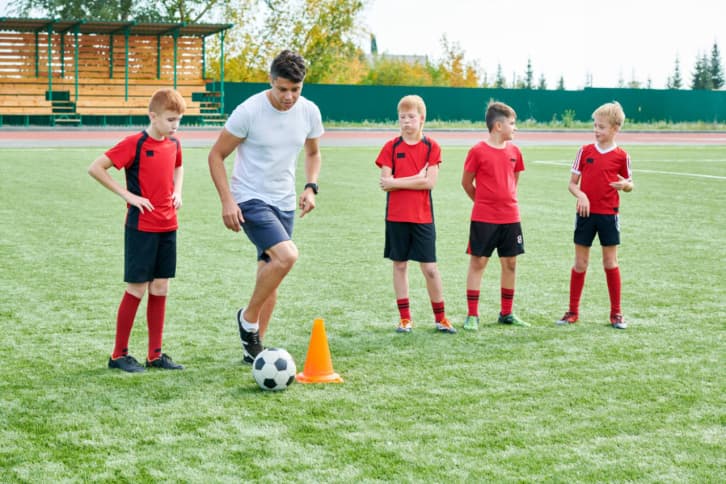
What if soccer felt less like practice and more like something kids actually wanted to do? For young players, enjoyment makes learning feel natural. Movement, choices, ball touches, simple challenges, and playful activities help kids build real skills without piling on pressure.
That’s where fun soccer classes for kids strike a healthy balance between development and enjoyment. When kids stay engaged, they participate more, try new skills, make their own decisions, and build real confidence. A positive experience helps kids learn while their enthusiasm for the game keeps growing instead of fading out.
Why Enjoyment Matters in Early Soccer
Young children learn through repetition, but that doesn’t mean grinding the same drill over and over. A kid can practice stopping a ball, changing direction, or passing all within a game, which gives them plenty of chances to actually use the skill.
Enjoyment drives participation. A kid who feels comfortable is far more likely to try again after messing up. Encouragement keeps them coming back for another turn.
What Kids Can Learn Through Play
Play-based soccer builds ball control, passing, dribbling, movement, and coordination all at once. Ball control develops naturally as kids stop, move, and change direction mid-play. Passing gets easier once a kid has a real reason to move the ball to a teammate, not just a cone.
Players also pick up spatial awareness along the way. Games push them to notice open space, track the ball, avoid crowding, and make quick choices, movement and decision-making, learned together.
Fun soccer classes for kids should build these skills right into the activity, rather than turning every drill into a test. A good coach adjusts the challenge on the fly while keeping things playful, letting kids feel success before nudging them toward something harder.
The Coach’s Role in Keeping Learning Active
Good coaching takes more than knowing soccer inside and out. Coaches also need to understand attention spans, confidence, movement, and what actually fits a kid’s age. Activities should get explained quickly so kids can start moving instead of standing around listening.
Long lines kill engagement fast. Frequent turns give young players more chances to touch the ball and make real decisions. Small-sided games and quick challenges keep everyone involved instead of half the group watching from the sideline.
At Soccer Stars Huron Valley, we believe kids learn best when instruction and play work together, introduce a skill, let kids experiment with it, then bring it back later in a game. That’s what keeps fun soccer classes for kids feeling like play instead of formal training.
How Parents Can Tell Whether a Class Is Working
Parents don’t need to judge a class by counting drills completed. Look for signs of real learning and participation instead.
- Is the child moving for most of the session?
- Are there frequent chances to actually touch the ball?
- Does the coach give simple instructions kids can follow?
- Do activities adjust when a child needs more support or more challenge?
- Can kids make mistakes without feeling embarrassed?
These details matter far more than any checklist. The strongest fun soccer classes for kids combine real structure with genuine creativity, meeting each child where they actually are. A beginner might need more demonstrations. A more experienced kid might need faster play or tougher decisions. Either way, the goal is helping that specific player improve.
Why the Right Balance Makes a Difference
Soccer doesn’t have to choose between enjoyment and development. Kids can practice dribbling inside a real game, work on passing during a team challenge, and learn to move into open space without sitting through long explanations first.
Coaches can build experiences where kids stay active, pick up real soccer concepts, and genuinely enjoy being part of the group. Young players develop at wildly different rates, so good fun soccer classes for kids need room for different personalities, confidence levels, and skill backgrounds, not a one-size-fits-all approach.
Conclusion
Can soccer build skills without feeling like practice? Absolutely, when it’s built around how kids naturally engage. Fun soccer classes for kids combine repetition, movement, simple instruction, teamwork, and genuine play, so kids gain real experience without ever feeling overwhelmed.
The best measure isn’t a checklist. It’s whether kids are engaged, trying, learning, and growing more confident. When soccer feels enjoyable, the practice happens almost without kids noticing, and that’s exactly what builds a foundation for years of continued play.
