

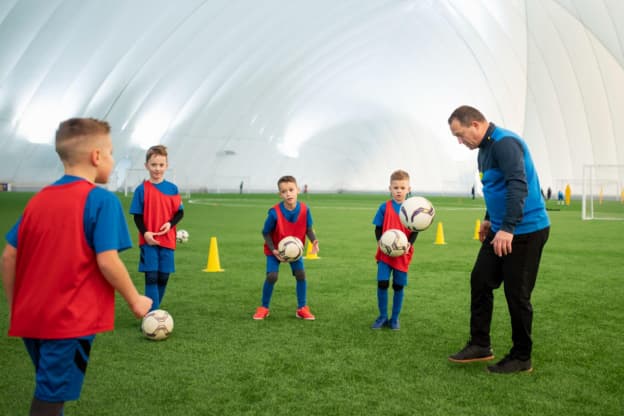
A child’s first sports class may look simple from the outside. Kids run around, kick a ball, laugh with teammates, and sometimes get distracted halfway through an activity. But behind those small moments, something much bigger is happening.
For many children, their first experience in a team sport introduces entirely new emotional, social, and mental challenges. They are learning how to follow directions in a group, communicate with other kids, manage excitement, and respond to unfamiliar situations all at once.
That is one reason early sports experiences can shape how children feel about teamwork, confidence, and physical activity later in life.
Parents searching for beginner soccer classes for kids are focused on helping children stay active. What many do not realize is that these early group experiences also support important brain development during childhood.
At Soccer Stars Huron Valley, we see children grow emotionally and socially in ways that go far beyond learning soccer skills.
New Experiences Help Build Brain Connections
Children’s brains develop quickly during the early years. Every new experience helps strengthen connections related to learning, movement, emotions, and social interaction.
When kids participate in group sports for the first time, the brain works through several tasks at once-
- Listening to instructions
- Watching other children
- Reacting to movement
- Following routines
- Managing emotions
- Making quick decisions
This combination of physical and mental activity helps strengthen neural pathways connected to coordination, focus, and problem-solving.
That is why activities like beginner soccer classes for kids can support development in multiple ways at the same time.
Team Sports Introduce “Social Thinking”
Many children spend their early years mainly interacting with family members or small familiar groups. Team sports introduce a completely different social environment.
For some kids, this may be the first time they need to-
- Wait for turns
- Share space with peers.
- Work toward group goals.
- Listen to another adult leader.
- Communicate during activities.
These situations help children practice what experts sometimes call “social thinking.” Kids begin learning how their actions affect other people around them.
During beginner soccer classes for kids, children naturally develop these skills through games and movement instead of formal lessons. They start understanding teamwork by experiencing it directly.
The Brain Learns Through Movement
Movement plays a major role in childhood brain development. Physical activity activates multiple parts of the brain connected to coordination, memory, emotional regulation, and attention.
That is one reason children learn best when movement is involved.
Soccer activities encourage kids to-
- React quickly
- Change directions
- Track moving objects
- Coordinate foot and body movement
- Focus while staying active
These experiences challenge the brain in healthy ways while still feeling playful and exciting.
Many parents choose beginner soccer classes for kids simply to introduce a sport, but the movement itself also supports learning and body awareness during important developmental years.
Kids Learn Emotional Skills During Group Activities
A first team sport experience is emotional for many children, even if adults do not always notice it.
Some children feel excited right away. Others feel nervous, shy, frustrated, or unsure about participating in a group.
Sports create opportunities for children to practice handling emotions like-
- Excitement
- Disappointment
- Nervousness
- Patience
- Confidence
- Frustration
For example, a child may miss a goal, struggle with an activity, or feel hesitant during group games. With encouragement and support, they slowly learn that mistakes are part of learning.
That emotional growth is one reason parents value supportive beginner soccer classes for kids more than highly competitive environments during the early years.
Children build confidence more effectively when they feel safe trying new things without fear of embarrassment.
Repetition Helps Children Feel More Secure
One important part of early childhood learning is repetition. Children feel more confident when they begin recognizing routines and understanding what to expect.
In beginner sports settings, repeated activities help children-
- Follow directions more easily.
- Build comfort with coaches.
- Understand team structure.
- Improve focus
- Feel emotionally secure.
Over time, many children who start out quiet or uncertain begin participating more openly because the environment becomes familiar.
At Soccer Stars Huron Valley, we see major confidence changes happen gradually during beginner soccer classes for kids. Sometimes a child who barely joined activities during the first session becomes fully involved just a few weeks later.
Team Sports Encourage Healthy Risk-Taking
Trying a new sport requires children to step slightly outside their comfort zone. This type of healthy challenge helps kids build resilience and independence over time.
Small experiences like-
- Joining a group activity
- Trying a new skill
- Speaking to teammates
- Participating in front of others.
all help children practice confidence in manageable ways.
Positive first experiences matter because they shape how children respond to future challenges. When kids feel encouraged instead of pressured, they are more willing to try new activities later on.
That is why many parents prioritize supportive beginner soccer classes for kids where learning feels positive rather than stressful.
Confidence Often Starts With Small Wins
Adults sometimes expect confidence to appear instantly, but for children, confidence usually develops through small repeated successes.
A child may feel proud simply because they-
- Followed directions independently.
- Kicked the ball successfully.
- Participated with teammates.
- Tried an activity without fear.
- Finished class feeling included.
These moments help children build trust in their own abilities.
At Soccer Stars Huron Valley, we believe first sports experiences should help children feel encouraged, capable, and excited to keep learning. During beginner soccer classes for kids, the goal is not only teaching soccer basics. It is helping children develop confidence, social comfort, and a positive connection with teamwork and movement.
Sometimes the biggest growth during a child’s first sports class happens quietly inside the brain long before parents ever notice it on the field.
