

Some children can walk into a room full of strangers and start talking within minutes. Others take more time. They may stay close to their parents, avoid conversations, or struggle to join social situations comfortably.
For many families, this has become more noticeable in recent years. Increased screen time, smaller social circles, and less face-to-face interaction have affected how some children communicate and connect with others.
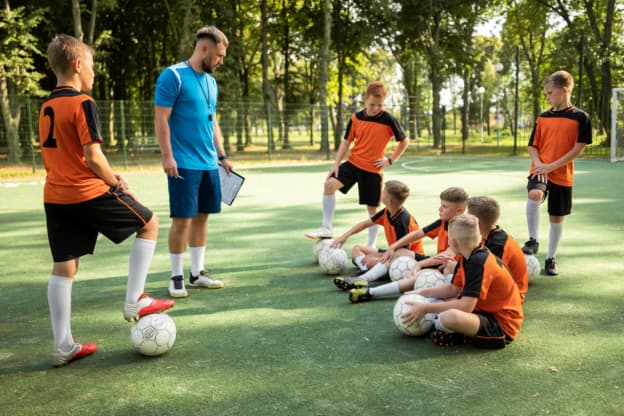
Parents often worry when kids seem quiet in group settings, especially if they have difficulty with small talk or making new friends. In fact, many quieter children connect more easily through shared activities instead of direct conversation. That is one reason programs like group soccer classes can feel much more comfortable for some kids than traditional social settings.
At Soccer Stars Huron Valley, we often see children become more outgoing naturally once they are focused on playing, moving, and participating together rather than trying to socialize directly.
Why Small Talk Feels Difficult for Some Children
Not every child feels comfortable starting conversations right away. Some children need extra time to warm up socially, especially in unfamiliar environments.
Small talk can feel challenging because it requires children to-
- Think of what to say quickly
- Read social cues
- Maintain eye contact
- Respond confidently
- Handle social pressure
For quieter kids, that can feel overwhelming.
This does not mean a child lacks social skills. Many children communicate better when interaction happens naturally during activities rather than through direct conversation.
That is why group soccer classes often work well for kids who struggle in more traditional social environments.
Shared Activities Remove Social Pressure
One reason group-based activities feel easier is because children do not need to force interaction. The activity itself creates opportunities to connect.
During soccer activities, kids naturally communicate while-
- Passing the ball
- Playing games
- Following instructions
- Working as teammates
- Celebrating goals
- Moving through drills together
These moments create social interaction without placing children under pressure to constantly talk.
In group soccer classes, communication happens through movement, teamwork, and shared experiences. For many children, this feels far less intimidating than being expected to start conversations independently.
Movement Helps Children Feel More Comfortable Socially
Physical activity does more than improve fitness. Movement can also help children regulate emotions, reduce nervous energy, and feel more relaxed in social settings.
Some children become more comfortable interacting once they are physically engaged instead of sitting still in unfamiliar environments.
Soccer naturally encourages-
- Active participation
- Cooperation
- Shared focus
- Nonverbal communication
- Positive group energy
This can make social interaction feel more natural and less forced.
Many parents searching for group soccer classes are not only looking for physical activity. They also want children to build confidence around peers in a low-pressure environment.
Kids Build Friendships More Easily Through Play
Adults often form friendships through conversation first. Children usually connect differently. Shared play is often the starting point for friendship during childhood.
When kids laugh, move, and participate together, social bonds develop naturally over time.
In group soccer classes, children connect through-
- Team games
- Shared routines
- Encouragement from teammates
- Group excitement
- Collaborative activities
This type of interaction helps quieter children feel included even if they are not highly verbal right away.
Some children who seem reserved in classroom settings become surprisingly confident during active group play because they feel less social pressure.
Group Activities Help Kids Practice Communication Gradually
Social confidence develops slowly for many children. Group-based sports allow kids to practice communication in small manageable ways instead of expecting instant outgoing behavior.
Children may start by-
- Listening quietly
- Following the group
- Responding to teammates briefly.
- Participating in games without much conversation.
Over time, many begin speaking more naturally as they grow comfortable with the environment.
At Soccer Stars Huron Valley, we often see shy children gradually become more expressive during group soccer classes because the focus stays on participation and teamwork rather than social performance.
The activity creates opportunities for interaction without making children feel watched or pressured.
Post-Screen Social Development Is Becoming More Important
Many parents today worry about how screens affect children’s social confidence. While technology can be useful, too much screen-based interaction may reduce opportunities for kids to practice real-world communication.
Children need experiences where they can-
- Read facial expressions
- React to group situations
- Solve small conflicts
- Work with peers
- Build comfort around others
Group sports provide those experiences in a natural and active way.
That is one reason more families are choosing group soccer classes as part of a balanced routine. Soccer encourages face-to-face interaction while keeping kids physically engaged at the same time.
Confidence Grows When Kids Feel Included
Children do not always need to become the loudest person in the room to feel socially confident. For many kids, confidence starts with simply feeling accepted and comfortable participating in a group.
Positive group environments help children-
- Feel less isolated
- Build trust with peers
- Practice teamwork
- Develop communication gradually.
- Gain confidence through participation.
At Soccer Stars Huron Valley, we believe children grow best in supportive environments where they can participate at their own pace. During group soccer classes, the focus is not just on learning soccer skills. It is also about helping kids feel connected, included, and confident around others.
For children who struggle with small talk, shared activities often create the kind of social comfort that conversation alone cannot.
