

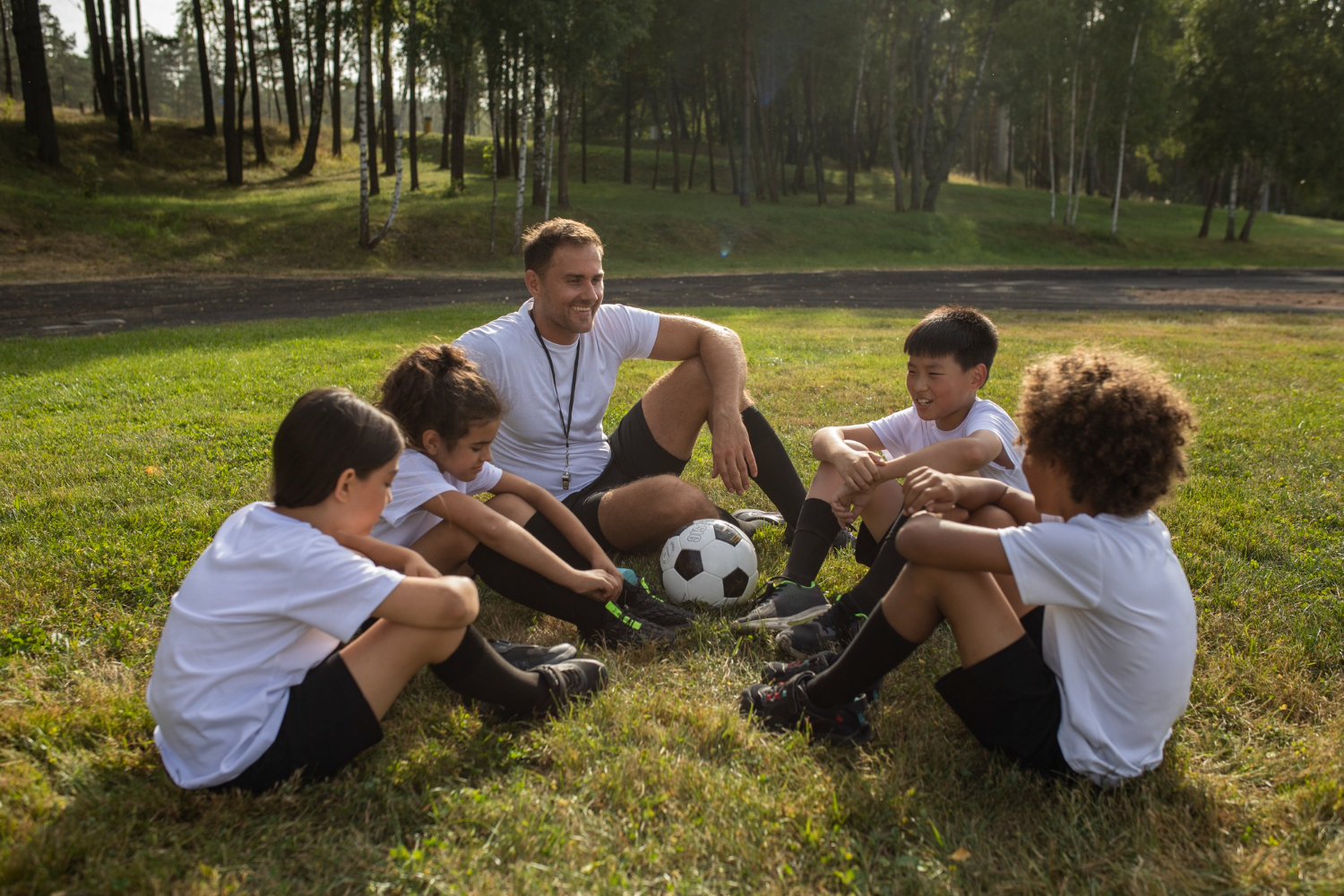
Summer gives young soccer players something they don’t always have during the school year: time.
There’s more room between one activity and the next. There are fewer rushed evenings, fewer days when practice has to fit between homework and bedtime. For a child who enjoys soccer, that extra time can change how they play. They can try a new move, lose the ball, try it again, and slowly figure out what feels natural.
That’s one reason a soccer summer camp can be more than another activity on the summer calendar. A longer session gives kids opportunities to practice skills and then use them in games, where they have to make their own decisions.
And that part matters. Young players need chances to experiment.
How summer gives kids more time to learn soccer
During a regular school week, soccer practice can feel like a short window. There may be enough time to work on a skill, but not always enough time to explore it.
Summer is different.
A player can spend more time with the ball without feeling like every few minutes has to produce a perfect result. Maybe they try a new way to turn away from a defender. Maybe they use their weaker foot even though it feels awkward. Maybe they attempt a pass when they normally would dribble.
Some attempts won’t work.
That’s part of the point.
Soccer is full of decisions that can’t be learned by memorizing instructions. A child has to see what is happening, choose an option, and learn from what follows. The more chances they get to make those decisions, the more comfortable they can become.
Experimenting starts with simple skills
A young player doesn’t need complicated drills to experiment. Often, the useful moments come from basic soccer skills.
A child learning to dribble might discover that slowing down helps them keep the ball closer. A player practicing first touch may realize that, pushing the ball too far makes the next move harder. Someone working on passing may begin to notice that a teammate is open before they receive the ball.
Those little discoveries add up.
We use age-specific curriculum, small-group instruction, and positive reinforcement so children can work on skills at a pace suited to their age and experience. The Huron Valley program serves children across different stages, from early introductory programs through more advanced youth development.
That structure gives coaches a better chance to see what a player is ready to try next. It also means a child who is still learning the basics doesn’t have to be pushed into activities meant for a much older or more experienced player.
What young players can experiment with
A summer program can create more opportunities to work on parts of the game that sometimes get overlooked.
- Changing direction: Kids can try different turns and learn when each one helps them keep possession.
- First touch: Receiving the ball from different angles can teach players to think about, where they want the ball to go next.
- Using both feet: Summer practice can give children more chances to work with the foot they usually avoid.
- Passing choices: Small-sided games can make players decide whether to pass, dribble, or wait for another option.
- Movement off the ball: Kids can start noticing open space instead of watching only the player with possession.
The goal isn’t to master all of this at once. It’s to give players enough repetition to understand a skill and enough freedom to figure out how they want to use it.
Why the game itself matters
A child can perform a soccer move perfectly during a drill and still have no idea when to use it in a game.
That’s why gameplay matters.
Once another player is moving toward them, the situation changes. The child has to react. There isn’t always time to stop and think about the technique they practiced five minutes earlier.
Soccer Stars builds gameplay into its development approach. Its programs use small groups and age-appropriate activities, with older players gradually introduced to technical skills, tactical elements, and team concepts as they progress.
For summer campers, that creates a useful back-and-forth. Learn something. Try it. See what happens. Go back to it.
That loop is where experimentation becomes part of actual soccer development.
Mistakes are useful when kids aren’t afraid of them
One of the easiest ways to stop a child from experimenting is to make every mistake feel important.
A player tries to beat a defender and loses the ball. Another attempts a difficult pass and sends it too far. Someone takes a shot that misses the goal by a mile.
None of those moments need to become a big deal.
Our approach encourages children to express themselves, try new skills, and learn from mistakes rather than making the score the only measure of a session. That is especially relevant for children who are still developing confidence on the field.
A young player who knows they can try again is more likely to attempt something unfamiliar.
That’s useful long after camp ends.
A different kind of summer soccer experience
At Soccer Stars Huron Valley, the focus is built around teaching soccer in a way that matches the child’s stage of development. The Huron Valley program highlights age-specific instruction, low kid-to-coach ratios, trained coaches, and a pathway that can support players as they move into more advanced programs.
Those details matter because summer campers don’t all arrive with the same background.
One child might already spend every weekend playing soccer. Another might be attending a structured soccer program for the first time. Some will want to work on a particular skill. Others will mostly want to chase the ball and play.
A useful camp has to leave room for those differences.
Soccer Stars’ broader camp model also goes beyond a short skills session. Camps can run for longer periods than regular classes and may include skill-building, games with progression, challenges and other activities. That extra time gives children more chances to move between instruction and play.
For a soccer summer camp, that combination is important. Kids need to understand a skill, but they also need opportunities to test it when the situation changes.
What parents may notice after the camp ends
The biggest change may not be a new soccer trick.
It could be something much smaller.
Your child might start practicing a turn in the backyard. They might ask why a professional player passed instead of shooting. They might pick up the ball without being asked and start trying something they saw during camp.
Those moments show that the game has started to become something they want to explore on their own.
That is a useful outcome because soccer development doesn’t stop when a scheduled session ends. Curiosity can carry the learning into the next game, the next practice, or a few minutes of kicking a ball around at home.
A soccer summer camp gives children concentrated time with the sport. What they do with that time depends on the environment around them. When they have room to make decisions, make mistakes, and try again, they can start developing a better feel for the game instead of simply repeating instructions.
Conclusion
Summer gives young soccer players room to test ideas.
They can try the move they’ve been hesitant to use. They can play with a different foot. They can make a poor decision, figure out why it didn’t work, and have another chance a few minutes later.
That freedom is valuable.
At Soccer Stars Huron Valley, age-specific coaching, small-group instruction, and a progression from foundational skills toward more advanced soccer development give children a setting where experimentation has a place. The aim is to help kids keep learning while they play, rather than making every mistake feel like a setback.
For many young players, that may be the best part of summer: having enough time to find out what they can do.
