

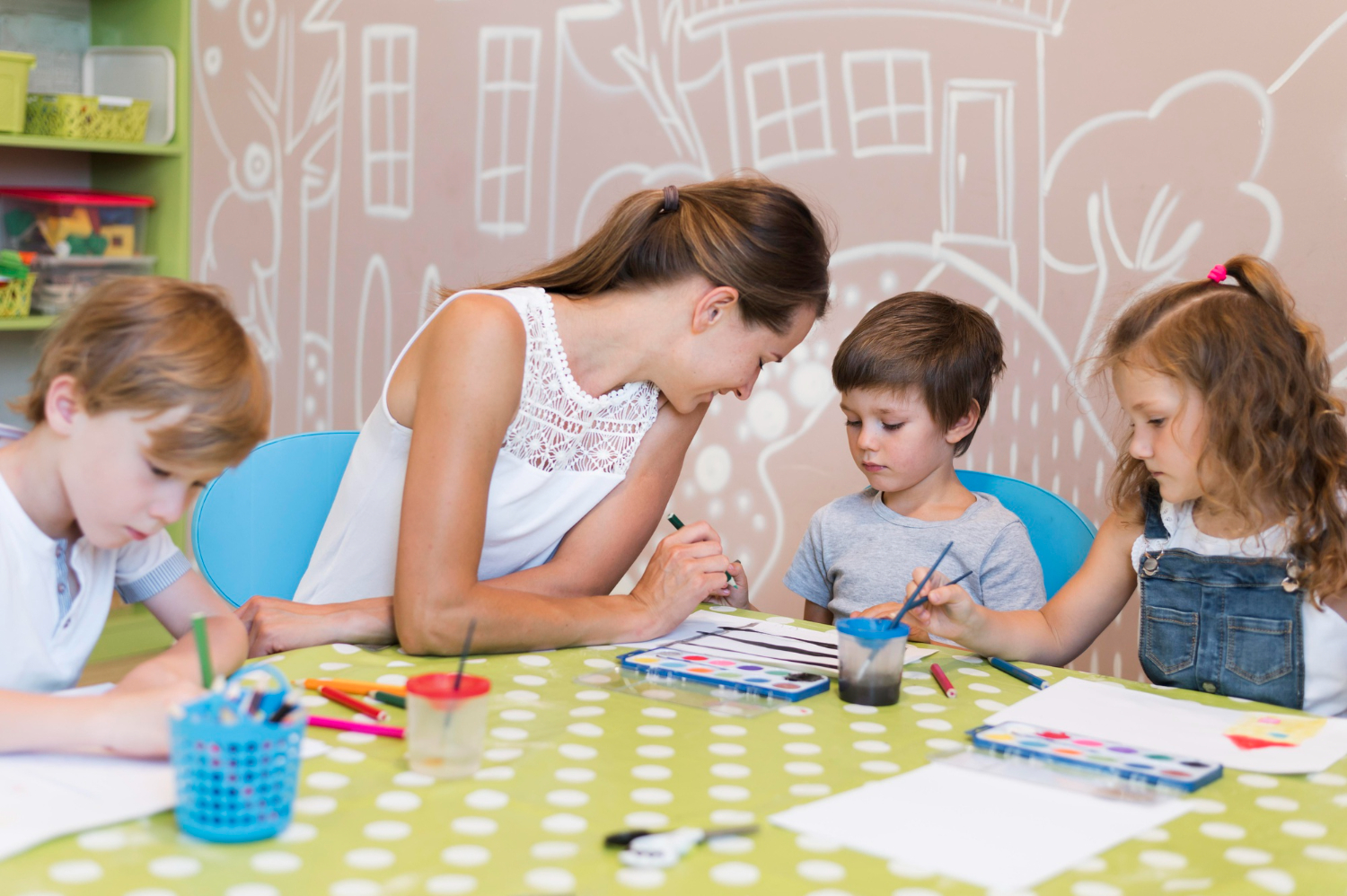
A toy gets snatched. A voice goes up an octave. A three-year-old announces that waiting is not happening today. Any parent who has stood at the edge of a playdate knows this scene, and it can feel like a red flag. It rarely is. Taking turns ranks among the hardest social skills of early childhood, and it gets built through repetition, not reminders.
Children don’t learn to wait patiently overnight. At this age, sharing a favorite toy or letting someone else go first can feel frustrating, especially when emotions run high. Calm guidance and repeated chances to practice help make the process easier. Simple preschool turn-taking activities, such as passing a ball or taking turns kicking toward a goal, let children practice waiting in a fun, low-pressure setting.
Why Waiting Feels So Big at Age Three
Preschoolers live in the here and now. The brain areas that support impulse control, working memory, and emotional regulation are still developing, so a child who spots the ball wants the ball immediately. Knowing that the ball will come back is a more abstract idea. Add a short attention span, a loose sense of time, and a limited vocabulary for big feelings, and grabbing becomes the quickest message available. Patience isn’t missing. It’s under construction.
Signs a Child Is Still Practicing Patience
- Hovering over or grabbing a toy someone else is using
- Melting down when a game ends or the line moves
- Insisting on going first every single time
- Walking away when the group asks for a little patience
Each one is a normal learning moment, not a behavior problem.
Why Play Teaches Fairness Better Than Lectures
Young children learn with the whole body. A speech about fairness fades in seconds, while a game that makes waiting visible sticks. Well-designed preschool turn-taking activities work because the rules can be seen: the ball moves, the line moves, and every child watches the turn come back around. That repetition builds cooperative play, self-control, and trust in the group, all in a setting where mistakes cost nothing.
Soccer: A Built-In Lesson in Sharing the Ball
Few sports teach turn-taking as naturally as soccer. One ball serves the whole group, so passing, dribbling relays, and follow-the-leader drills all require watching, waiting, and responding. Children also build gross motor skills and coordination while picking up early sportsmanship which makes the lesson feel like fun instead of homework.
Easy Group Games to Try This Week
Preschool turn-taking activities like these need nothing more than a ball and a little space:
- Roll and name it: Sit in a circle and say a friend’s name before rolling the ball to that child. The named child rolls next.
- Three-kick goal: Each child takes three kicks at a cone goal, then steps to the back of the line while a parent counts aloud.
- Freeze dance leader: Pause the music and pick a new leader each round, so every child gets a turn running the show.
- Sand timer pass: Hand over a one-minute sand timer with the ball. When the sand runs out, the ball moves on.
Keep rounds short, celebrate the waiting itself, and stop while everyone is still having fun.
What to Say When Patience Runs Out
Short, calm phrases work best. Try, “The ball goes to Ava next and then you’re up.” Praise the waiting, not just the result: “You kept your feet still while Max kicked. That was hard work.” Practice before a playdate, and skip forced sharing in the middle of a meltdown. A child who feels heard learns faster than one who feels scolded.
How a Coach-Led Class Adds Something Home Can’t
Practice at home is valuable, but a group setting adds real peers, a predictable routine, and an adult trained to guide the moment. At Soccer Stars Huron Valley, we build turn-taking into every lesson through age-specific games, a fun and non-competitive atmosphere, and a low kid-to-coach ratio that lets each child be seen.
Toddlers ages 1 to 2 can start with Parent & Me, a music and movement class with a parent right beside the child. Children ages 2.5 to 10 can move into Super Soccer Stars, where soccer basics are taught through play. Preschool turn-taking activities fit this format well because the coach models patience while classmates show what waiting looks like.
Where the Skills Go Next
Once waiting feels easy, children are ready for bigger teamwork ideas. Soccer Stars United, for ages 5 to 12, gradually introduces technical skills and team concepts. Directors who want the same benefits on site can request a school enrichment program.
Quick Answers for Parents
At what age do children usually learn to take turns?
Many children begin showing the skill around ages 3 to 4, and it keeps growing through the early school years. Every child moves at an individual pace.
Is grabbing a sign of a bigger problem?
Grabbing at this age is common. Consistent practice and calm coaching usually help, and a pediatrician can address any broader concerns.
Conclusion
Taking turns doesn’t arrive overnight, but it does arrive with practice. Preschool turn-taking activities that are short, playful, and repeated give young children the chance to build patience one pass at a time.
Taking turns also helps children learn that other people have needs and feelings, too. Parents can reinforce this skill at home by playing simple games, waiting for each child to have a turn, and praising patience rather than perfection. Small moments of practice can make group activities feel more comfortable and help children participate with greater confidence over time.
At Soccer Stars Huron Valley, families across Ann Arbor, Milford, Highland, White Lake, Commerce Township, and Brighton can watch that growth firsthand. Explore our Super Soccer Stars classes or find a class and see patience turn into confidence.
