

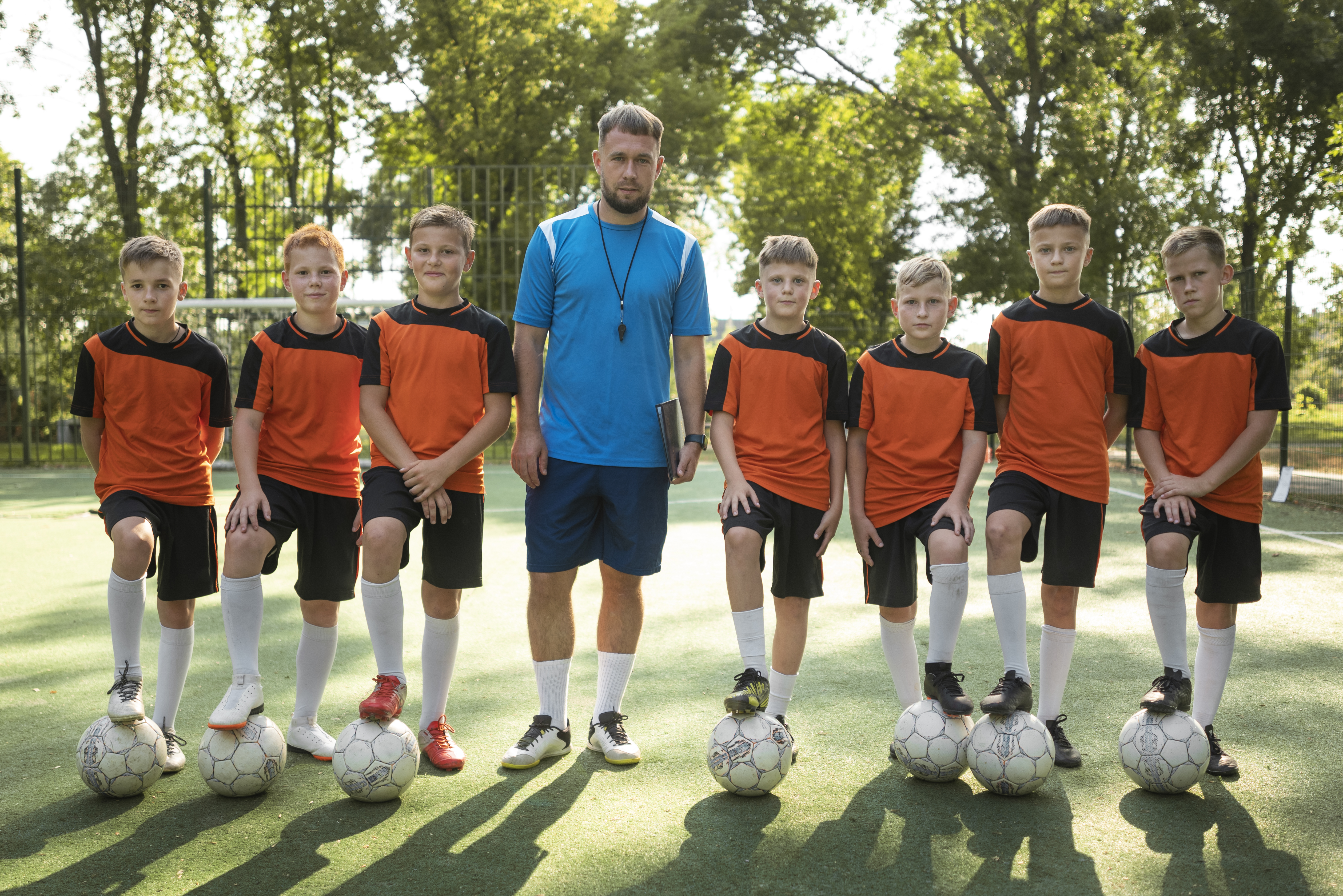
A six-year-old and a twelve-year-old may both enjoy soccer but they are not learning, or experiencing the game in the same way. Their physical abilities, attention spans, confidence, coordination, and understanding of teamwork develop at different rates.
Younger children often benefit from simple activities that build basic movement and ball skills, while older players can handle more complex decisions and game situations. That is why soccer for 6-12 year olds works best when coaching reflects each child’s stage, helping players stay engaged, confident, challenged, and excited to improve.
Why Age Matters on the Soccer Field
Kids grow and learn at their own pace, but age still helps coaches pick activities that fit where a child actually is. The right level of instruction keeps soccer challenging without tipping into overwhelming.
- Younger players focus on controlling and stopping the ball.
- Basic dribbling and direction changes build coordination.
- Simple game ideas help kids understand how soccer actually works.
- Older players can handle more complex decisions mid-game.
- Faster transitions push developing skills and awareness further.
- More responsibility encourages communication and teamwork.
Instruction that fits a child’s age helps them build skills with real confidence. It also creates a smoother path from basic movement toward a deeper understanding of the game.
What a 6-Year-Old May Need
At six, soccer should feel active, easy to follow, and fun above all else. Kids this age are still working on balance, coordination, spatial awareness, and following directions. Long explanations lose them fast, so short demos and constant movement work a lot better.
A younger player benefits from dribbling, stopping, turning, kicking, and simple passing. Small-sided games give kids more chances to touch the ball and make basic decisions on their own. The focus isn’t perfect technique, it’s getting comfortable with movement and the ball.
What Changes Around Age 8 or 9?
As kids move through elementary school, most get better at following instructions, remembering patterns, and connecting individual skills to team play. They start asking why a move matters instead of just copying what they see.
At this stage, soccer for 6-12 year olds can include more purposeful passing, receiving, changing direction, defending space, and moving after a pass. Coaches can bring in simple tactical ideas while keeping practice active and moving. Players start recognizing when to support a teammate, create space, or protect the ball.
What a 12-Year-Old Can Handle
By twelve, many players can process a lot more during a game, and understand how their choices affect the whole team. They’re often ready for quicker decisions, tougher technical work and more tactical detail.
Soccer for 6-12 year olds should give older players real problems to solve, not just directions to follow. A coach might ask a player to spot passing options, read defensive pressure, or decide when to dribble versus pass. Situations like these connect raw skill with actual game awareness.
Confidence Should Grow With the Challenge
The right level of difficulty matters no matter the age. Too easy, and kids lose interest fast. Too hard, and they get frustrated or start hesitating. The sweet spot gives players something to work toward while still letting them feel like they’re succeeding.
Confidence in soccer for 6-12 year olds builds through small wins, completing a pass, stopping a ball cleanly, finding open space, defending well, or trying a new move. Kids learn that getting better comes from practice, not from being perfect right away.
At Soccer Stars Huron Valley, we build sessions around where each child actually is developmentally, while still pushing them to stretch a little further. Younger players get room to explore. Older players get room to make more of their own calls.
The Social Side Changes, Too
Soccer isn’t only about technical skill. A six-year-old is often still learning to take turns, listen to a coach, share the ball, and just feel comfortable around other kids. A twelve-year-old is usually more focused on teamwork, communication, leadership, and handling competition.
That means soccer for 6-12 year olds should support social growth right alongside physical and technical skills. Older players get encouraged to communicate clearly, help teammates and stay respectful when a game doesn’t go their way. Younger players pick up those same habits through simple routines and good examples.
Parents Should Look Beyond the Age Range
Look for coaches who use age-appropriate activities, explain skills clearly, give kids plenty of chances to actually play, and adjust the challenge when a child needs more support or more complexity. Ask whether players get encouraged to make their own decisions and learn from mistakes.
A strong program for soccer for 6-12 year olds should meet kids exactly where they are while still helping them move forward.
Building a Better Long-Term Soccer Experience
A good soccer journey doesn’t require a six-year-old to train like a twelve-year-old. It requires a progression that actually respects how kids grow. Early experiences build enjoyment and coordination. Later experiences add decision-making, tactical awareness, and independence.
For families looking into soccer for 6-12 year olds, the real question isn’t whether a program teaches soccer, it’s whether it teaches soccer in a way that makes sense for your child’s age and stage. A thoughtful program should give you confidence that learning is both challenging and genuinely enjoyable.
Choosing the Right Fit
Our approach at Soccer Stars Huron Valley gives players room to grow at their own pace, with support, confidence, and real enjoyment built in. Ask any program about their coaching methods and how they actually measure progress, the best programs give kids challenges that fit their development instead of putting every player on the same path.
Conclusion
Age should shape a child’s soccer experience, not limit their potential. When coaching reflects each stage of development, younger players build essential skills and confidence, while older players get to explore harder decisions, and bigger responsibilities.
The goal is an environment where kids enjoy learning, stay engaged, and feel encouraged to improve at their own speed. With the right support, every stage of development brings meaningful progress, stronger teamwork, and more enjoyment. Soccer for 6-12 year olds can help kids grow as players while building confidence and a love for the game that sticks around.
